

97% of the global wild tiger population has been lost in 100 years. Fewer than 5574 remain so it’s vital we protect them and their precious habitat. Seventy percent (3167) of all wild tigers are in India. Poachers have jeopardised future wild tiger survival for decades with snares and traps camouflaged along tiger trails. Our Anti-Poaching Patrols aim to eradicate snares around Bandhavgarh so tigers can walk safely, and to educate local communities to foster positive attitudes towards tigers and other wildlife.
Your support is vital to the survival of wild tigers in Madhya Pradesh, India’s “Tiger State.” Bandhavgarh, where our Anti-poaching patrols work, is at the heart of Madhya Pradesh and is home to more than five times the number of wild tigers which roamed there when our work began! Our Anti-poaching patrols are not only the first line of defence against wildlife crime, but they’re also the heart of effective wild tiger conservation. Their work extends far beyond patrolling, by delivering lasting benefits for wildlife, habitats, and local communities. Despite conservation successes, wild tigers remain critically endangered due to persistent threats: most notably poaching, retaliatory poisoning and the illegal wildlife trade. Below we outline why your investment in our anti-poaching patrols is essential and the impact your donation achieves.
The visible presence of our anti-poaching patrols deters poachers and illegal loggers. Our Patrollers can quickly respond to signs of illegal activity, preventing poaching before it occurs. Our team also collects crucial evidence (traps, snares, footprints) for law enforcement.
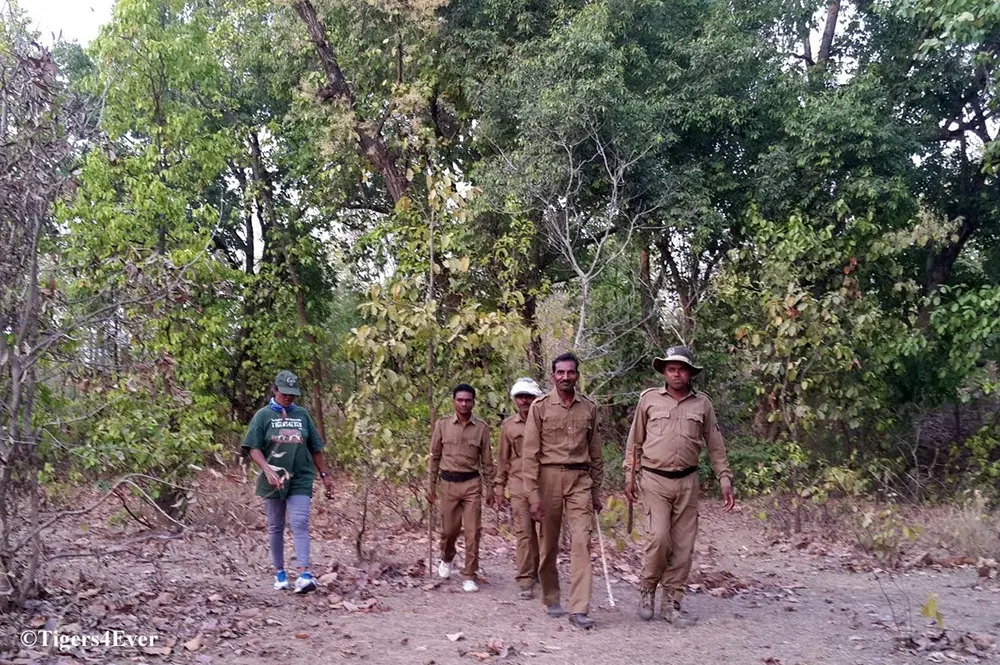
Our Patrollers frequently interact with local communities, building trust and gathering intelligence on potential threats and problems.
Our patrols also help to identify, manage and mitigate conflicts, such as livestock depredation, by providing early warnings and support, and supporting compensation claims when the worst happens.
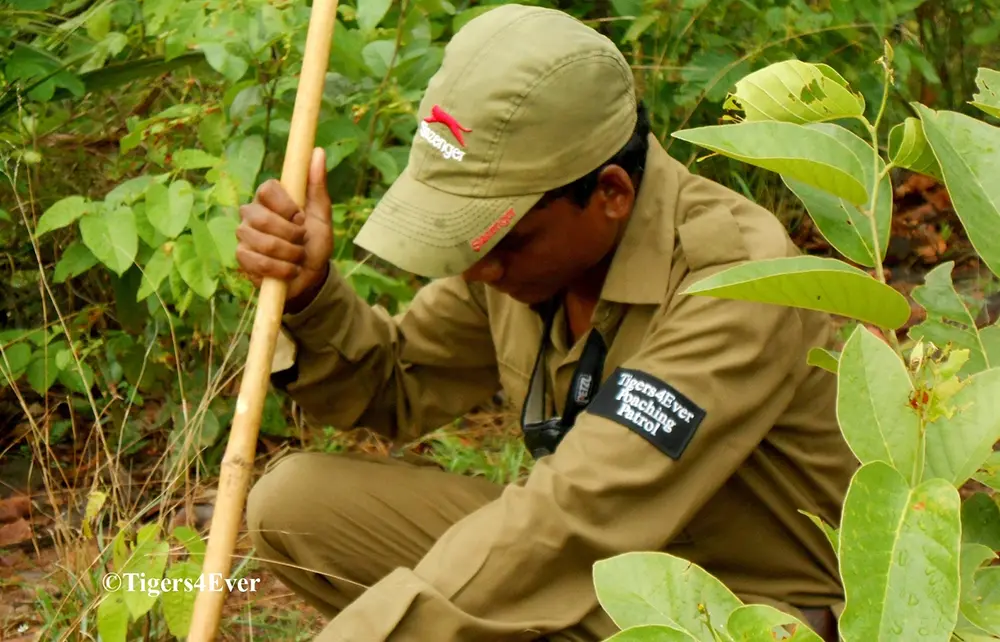
Our Anti-Poaching Patrols also record tiger sightings, pugmarks, scat, and prey abundance, which in turn contributes to scientific monitoring and census preparation and data.
Our patrollers also monitor waterholes (Tigers4Ever waterholes and natural/seasonal water sources too), grasslands, and forest health, identifying threats like forest fires or invasive species, such as lantana which strangles and out competes natural forest flora.

Our Patrols gather information on poaching networks, movements and illegal trade to help prevent tiger deaths and ensure that poachers can be caught when they have laid traps, etc.
The documentation and testimonies of our patrollers and team coordinators could be vital for ensuring the successful prosecution of wildlife crimes and other crimes committed during forest encroachment.
Our Patrollers frequently educate villagers about the importance of tigers and the legal consequences of poaching. They also provide forest safety advice for the villagers and their livestock to reduce both conflict and loss.
We employ local people as Tigers4Ever patrollers, and they inspire others to become conservation ambassadors in their communities or even future patrollers and wild tiger protectors.
Our Patrollers frequently educate villagers about the importance of tigers and the legal consequences of poaching. They also provide forest safety advice for the villagers and their livestock to reduce both conflict and loss.
We employ local people as Tigers4Ever patrollers, and they inspire others to become conservation ambassadors in their communities or even future patrollers and wild tiger protectors.

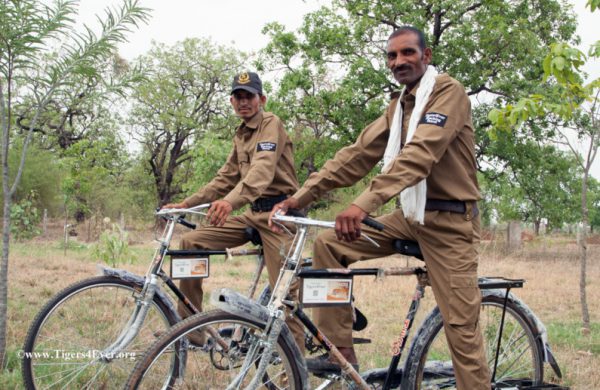


Areas with regular patrols report significantly fewer poaching incidents. In Bandhavgarh, unnatural wild tiger deaths due to poaching have decline by 98.5% since we established our patrols in 2015.
Effective patrolling has contributed to the stabilisation and growth of tiger populations in Bandhavgarh, with numbers increasing by 611 percent in the last 15 years.
Employment opportunities for local people as patrollers helps to reduce their dependence on scarce forest resources and fosters positive attitudes toward wildlife and habitat conservation.
Anti-poaching patrols are the backbone of tiger conservation in Bandhavgarh. Their work is multifaceted— protecting tigers, supporting communities, gathering vital data, and responding to emergencies. Investing in and supporting Tigers4Ever’s anti-poaching patrols is essential for the long-term survival of wild tigers and the health of Bandhavgarh’s forests. Which is why our anti-poaching patrols are a keystone project for Tigers4Ever and why we give them our utmost priority every year.
Ensuring our patrollers are well-prepared, well-equipped and safe.
Climate Change has resulted in successive years of poor monsoon rainfall which has in turn led to severe extended droughts in Bandhavgarh impacting all wildlife in the area, including tigers.
Our Patrollers expand awareness and support for conservation in the forests and the villages, whenever they encounter people. This includes the use of training tools including safety banners, posters and talks.
Regular updates and impact reports keep you informed of the progress made by our anti-poaching patrols and the challenges which they face.

The world’s wild tigers and their forest habitats are under threat. Protected Tiger Reserves are surrounded by buffer zones, intended to define the boundaries of the burgeoning human population. Frequent wild animal movement leads to human-animal conflict in the buffers, where poachers focus laying their wire snares along tiger trails. In the last fifty years, Bandhavgarh lost many tigers in poachers’ snares and to retaliatory poisoning. In 2023 the number of wild tigers which have died in India has reached a 15 year high. If poaching isn’t halted it will devastate all wild tiger populations and threaten their long-term survival.
Our anti-poaching patrols protect wild tigers in the buffer forests around Bandhavgarh, in areas where historically poaching and poisoning were rife, removing snares so tigers can walk the forests safely. Our patrols help to eliminate other illicit activities in buffer forests including logging/resource harvesting. Eliminating illicit activities reduces the impact on precious tiger habitat. Our work with local communities helps change attitudes towards poaching and further support the long-term survival of wild tigers
Bandhavgarh has one of the highest densities of wild tigers in India, a country where forests and wildlife are disappearing at an alarming rate. Our patrols have achieved a 98% reduction in tiger deaths from poaching and poisoning in just 8.5 years. Maintaining a positive impact by continuing patrolling is key to the long-term survival of wild tigers; whilst educating and employing local people helps to relieve poverty.
Our ultimate goal is to prevent the extinction of wild tigers. It is vital that we eliminate wild tiger deaths due to poaching and retaliatory poisoning to ensure that wild tigers are around for future generations.